Goodwood Locksmith ServicesService bulletin 1 of 3
Spare Car Key Duplication: how the work is done
Households with more than one driver and one car key end up trading it back and forth, which works until two people need the vehicle at once.
Uxbridge, Ontario · Locksmith · open 24/7
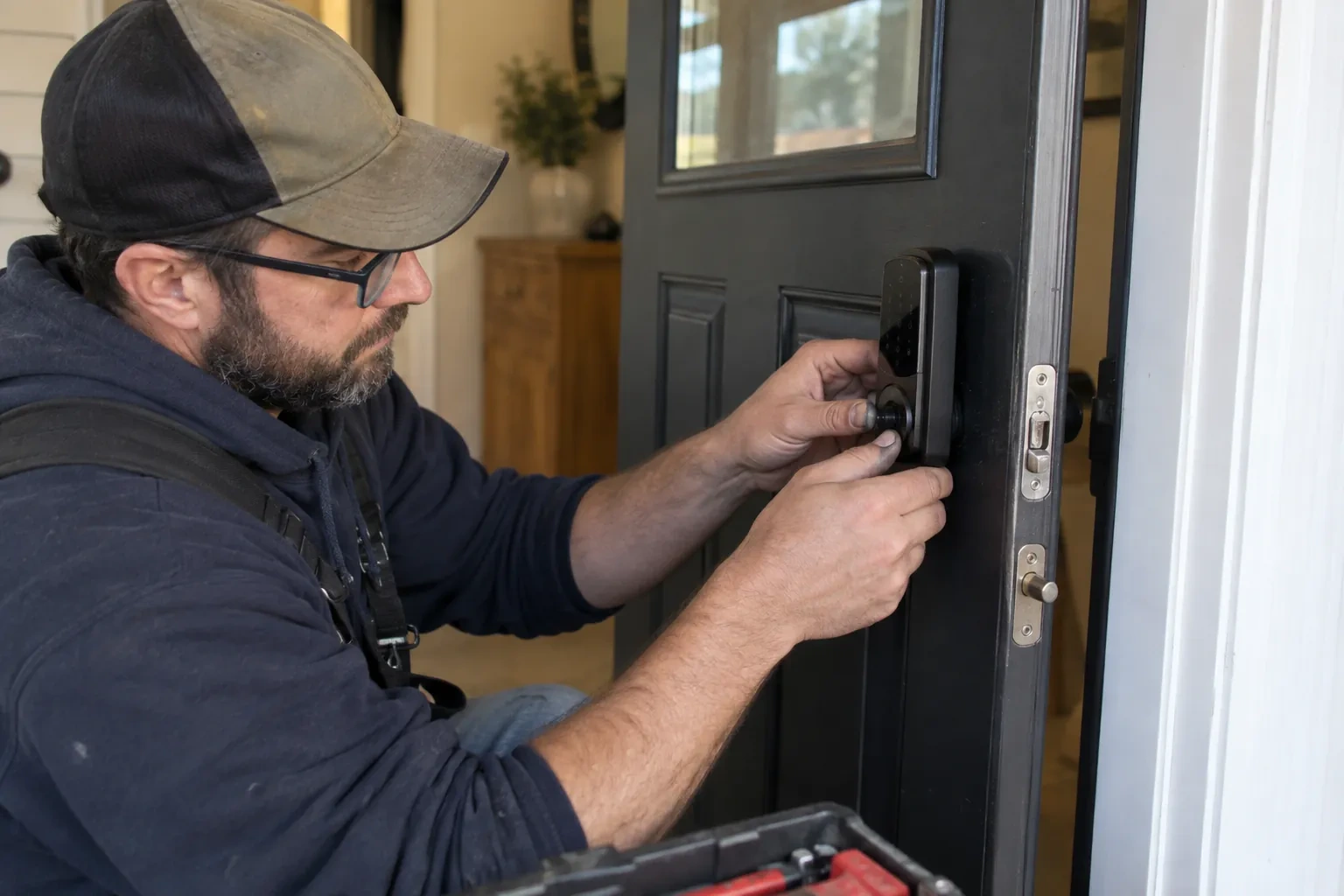
Households with more than one driver and one car key end up trading it back and forth, which works until two people need the vehicle at once. Making a second key from the original lets each driver carry their own, cut from the same blade profile and carrying the same chip or code the immobilizer recognizes, so neither key behaves differently from the other. The locksmith tests both apart from each other in the doors and the ignition before handing them back, and a family running two vehicles on the same lock family can sometimes be brought onto one key altogether.
Checking how many keys already exist
A vehicle can be sitting on more than the one key its owner mentions, and an honest account of every key, valet key and remote in circulation shapes what happens next. If two or three already exist and work, a new spare simply joins that set. If a key was lost some time ago and never accounted for, that shifts the conversation toward reprogramming the whole system to drop the missing one, rather than quietly adding a fourth key to a set that already has an unknown copy loose somewhere. Either way, knowing the real count is worth establishing before cutting begins.
Giving the new key its electronic identity
A cut blade alone will turn the lock but will not start a car with an immobilizer, so the new key also needs the chip data the vehicle expects. Where the transponder supports it, the original's data is read and cloned onto a fresh chip directly, sometimes with the help of vehicle-specific data pulled from the car itself. Where cloning is not supported for that application, the locksmith instead connects to the vehicle's diagnostic port and walks the car's own security module through enrolling the new chip as an additional valid key, a process that can take longer but produces a key the vehicle recognizes on its own rather than one imitating another.
Two keys, both proven
The visit ends with two keys that have each been tested on their own: every door, the trunk or hatch, the ignition or start button, and any remote functions. Neither key is a backup that has only been assumed to work, and neither is treated as the senior copy. It is worth deciding on the spot which key rides on the daily ring and which goes into storage, and writing that decision down somewhere the household will actually check later, such as a shared note or a label on the ring itself, rather than trusting memory a year from now.